Autumn hands you two things for free: a pavement scattered with horse chestnuts and an argument about whose is best. Conkers is one of the simplest games ever invented — two nuts, two lengths of string, and a set of rules every playground treats as law. If you're new to it, or you're teaching someone who is, here's how to string a conker properly, play a fair two-player game, and settle the score without anyone going home with bruised knuckles.
What You Need Before the First Match
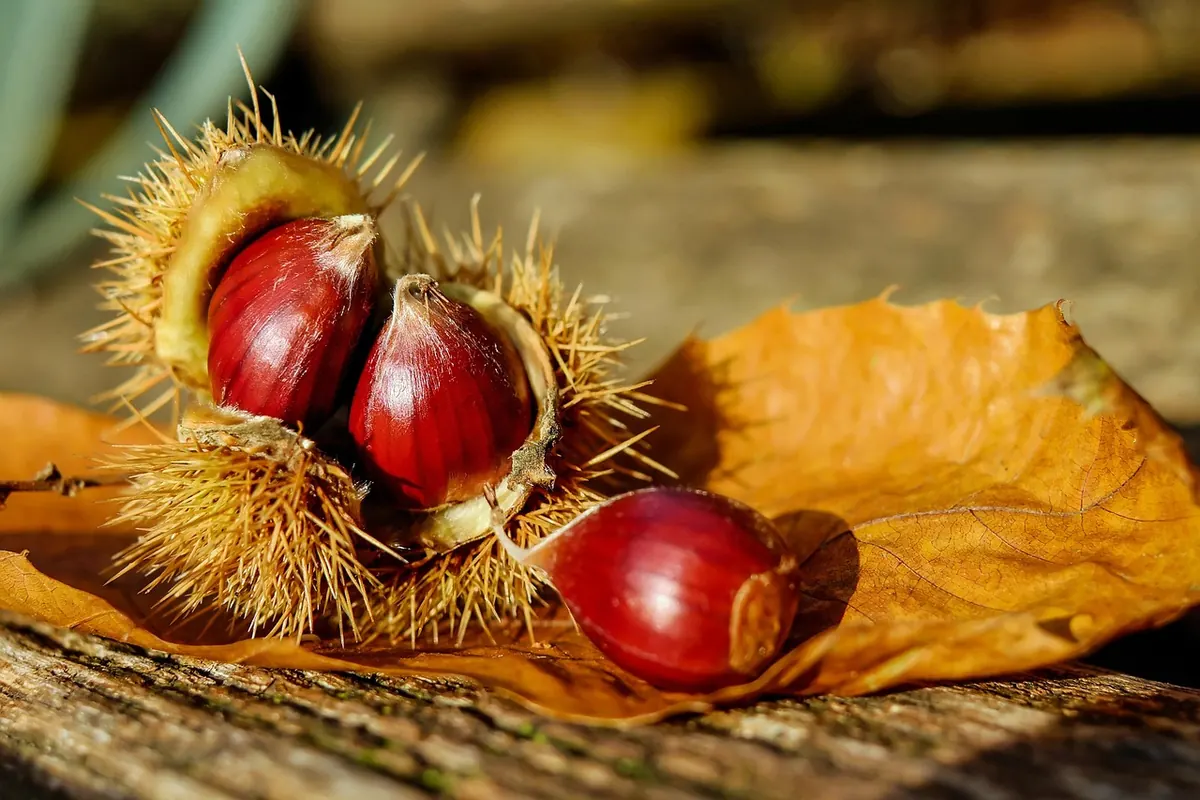
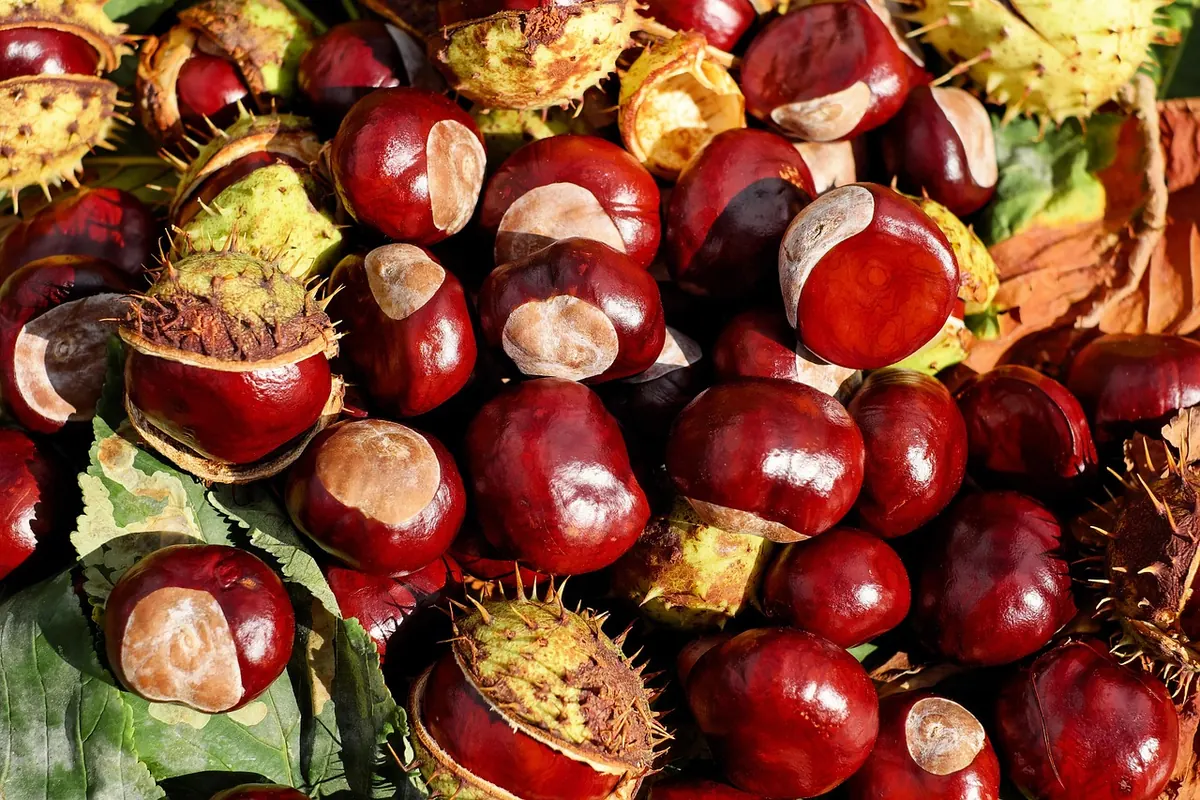
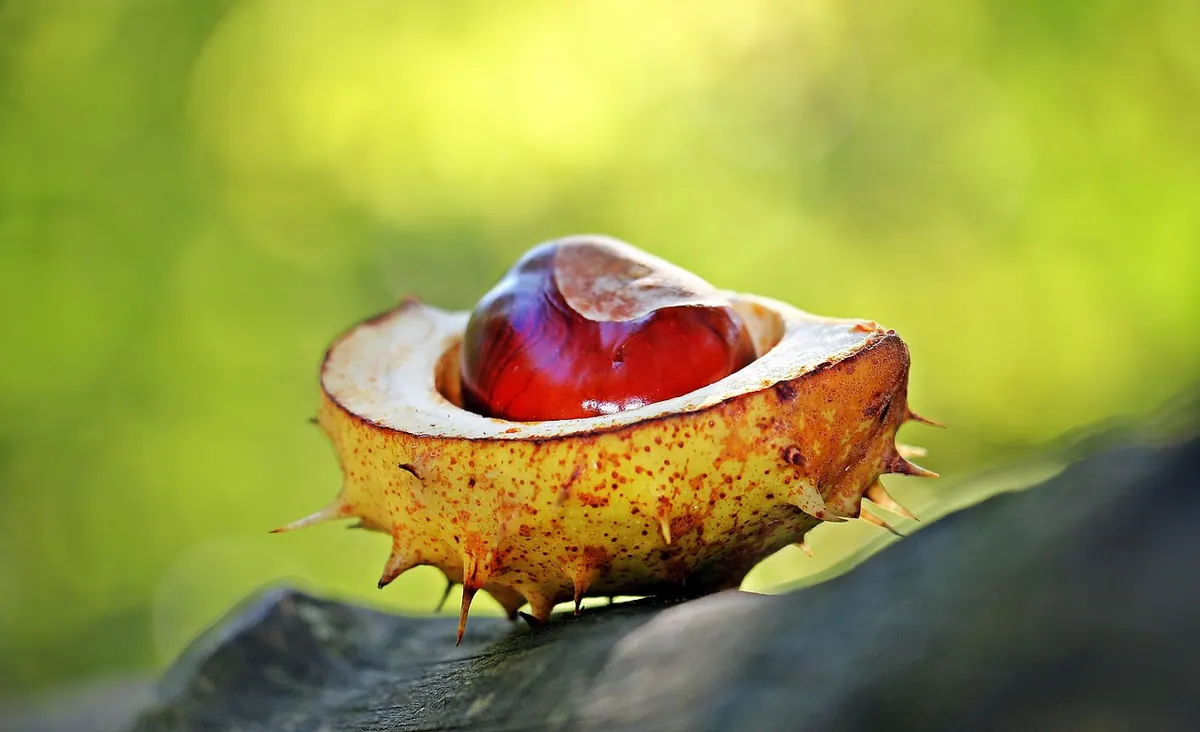
Real conkers come from the horse chestnut tree, not the sweet chestnut. You're looking for the spiky green case that splits and drops through September and October. Inside is a smooth, dark brown nut with a pale scar on one side. Sweet chestnuts are smaller, pointier, and belong on a fire rather than on a string.
Pick nuts that feel heavy for their size and firm all over. Anything soft, cracked, or already holed by an insect will fail early. If they're fresh off the ground, leave them somewhere dry and airy for a few days — a windowsill or an open paper bag does the job. Older conkers harden naturally, which is why so many players keep a small stash from one year to the next.
- Two conkers of similar size, one each
- String: about 25 cm (10 in) per player. A shoelace is traditional because knots grip it well; butcher's string or thin cord works too
- A skewer, thin nail, or small screwdriver for making the hole
- A small bead or a folded scrap of card to stop the bottom knot pulling through
- Optional: a glove for the holding hand, if your rules allow it
Threading and Stringing a Conker
Get this right and the rest of the game takes care of itself. A conker that slips off its string mid-swing is the most annoying way to lose.
- Make the hole. Push the skewer through the centre, top to bottom, working over a table or mat so the conker can't roll. Twist as you push rather than forcing it. If you're using anything sharp, get an adult to help.
- Thread the string. Push one end through the hole and pull roughly 5 cm out of the bottom.
- Knot the bottom. Tie two or three firm overhand knots, or add a small bead above the knot so it cannot pull back through the hole.
- Knot the top. Make a loop that fits over your hand or a finger. Some players loop it round the middle finger; others slip it over the back of the hand. Whatever you choose, it must not be able to fly off when you swing.
- Check the length. Measure the string between your hand and the top of the conker. Around 25 cm is the usual standard, and many competitions cap it near 30 cm. Both players should use a similar length — that's what makes a game fair.
Taking Turns: Who Strikes First
Toss a coin or play odd-or-even to decide who swings first. The other player holds their conker out at roughly chest height, string taut but not stretched tight. The striker stands a little over one arm's length away, waits until the holder says "ready", and then swings.
There are two common ways to alternate:
- Alternate strikes. One swing each, hit or miss, then swap roles. Slower, but easy to follow.
- Keep swinging until you miss. A hit earns you another go; the first miss hands the turn to your opponent. This is the version most people remember from school, and it makes for quicker, tenser games.
Decide which one you're using before the first swing. Most mid-game disputes come from two people playing different versions of the same game.
What Counts as a Fair Hit
Only the conker is a target. Catching your opponent's hand, wrist, or the string is a foul, and the usual penalty is losing your turn. Keep the swing controlled: a short, straight flick of the wrist does more damage than a big hopeful haymaker, and it's far easier to aim.
The holder has responsibilities too. Hold still. No jerking the conker away, lifting it, or spinning it as the striker swings — that's the conkers equivalent of moving the goalposts. If you fumble and drop your conker on the ground, most house rules allow one free re-hang. If the strings tangle, stop, sort them out, and start again with a fresh turn.
Scoring: One-ers, Two-ers and the Argument About Maths
A brand-new conker is a none-er. Beat somebody with it and it becomes a one-er. Beat someone else and it's a two-er, and so on. The numbers carry real weight: a conker with a long winning record is a small trophy in its own right, and people remember them.
There's a second system that many players prefer. The winning conker absorbs the loser's score, plus one for the win. So if your one-er beats a three-er, your conker becomes a fiver. Both systems are widely used, which is exactly why you should agree on one at the start. Mixing them is how most conker arguments begin.
A game ends in one of three ways: one conker shatters into pieces, one conker falls off its string, or a player concedes. In all three cases, the other player takes the win and the score.
Setting Up Safely
Give yourself space
Clear the area before anyone swings. You want no windows, parked cars, or passers-by within reach. A quiet corner of a park or a back garden path is ideal. Stand side-on to your opponent rather than face-to-face, so a wild swing travels past their body instead of into it, and keep spectators behind the striker.
Protect hands and heads
- Hold the string, not the conker. Fingers wrapped round the nut are fingers waiting to be hit.
- A glove on the holding hand is fine in casual play, though some competitions ban it — check the rules if you're entering one.
- Agree in advance that any swing above shoulder height ends the game. Nothing good comes from a head-height swing.
- Stop when hands get sore or the light fades. Tired players swing wildly.
A word about the nuts themselves
Horse chestnuts are not food. They're mildly toxic to people and pets if eaten, and they taste dreadful, which is some consolation. Wash your hands after drilling and handling them, keep them away from dogs and toddlers who might chew, and if you think someone has swallowed one, contact a doctor, your local poisons service, or a vet promptly rather than waiting to see what happens.
Your First Game, Start to Finish
Two conkers, two 25 cm strings, a clear patch of ground, and one agreed set of rules. Decide who goes first, hold steady, swing straight, and count the wins as they come. Don't worry about hardening tricks, vinegar soaks, or secret coatings for now — those are next autumn's project, and many competitions ban them anyway. The best conker in the box is usually just the one you threaded properly and looked after.
Photo: NoName_13 / Pixabay